Suppliers
Setting up a packing workshop
A workshop starts with workflows, workstations and the product to be packed. These are the questions to ask before buying equipment.
Setting up a packing workshop
From product to first batch.
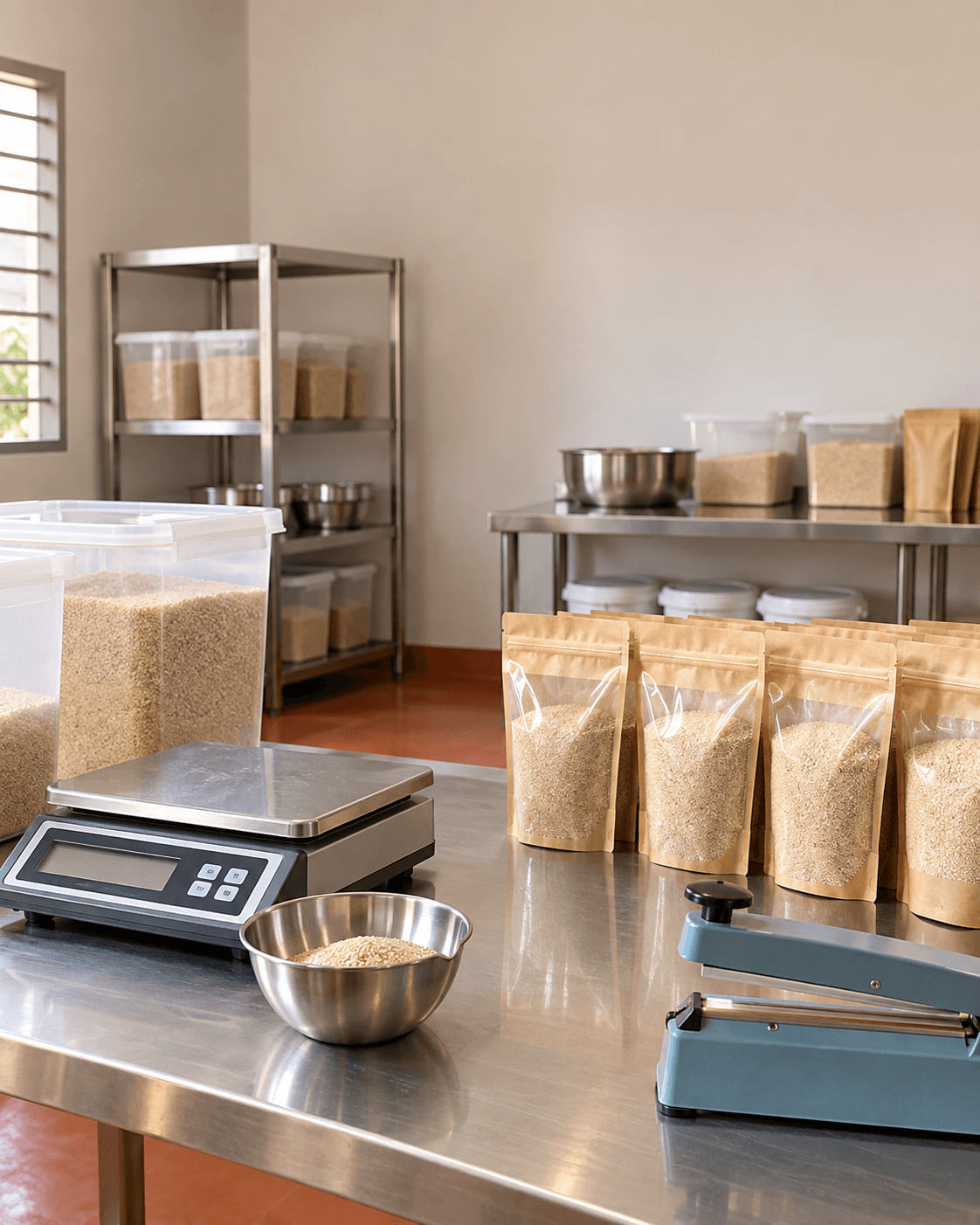
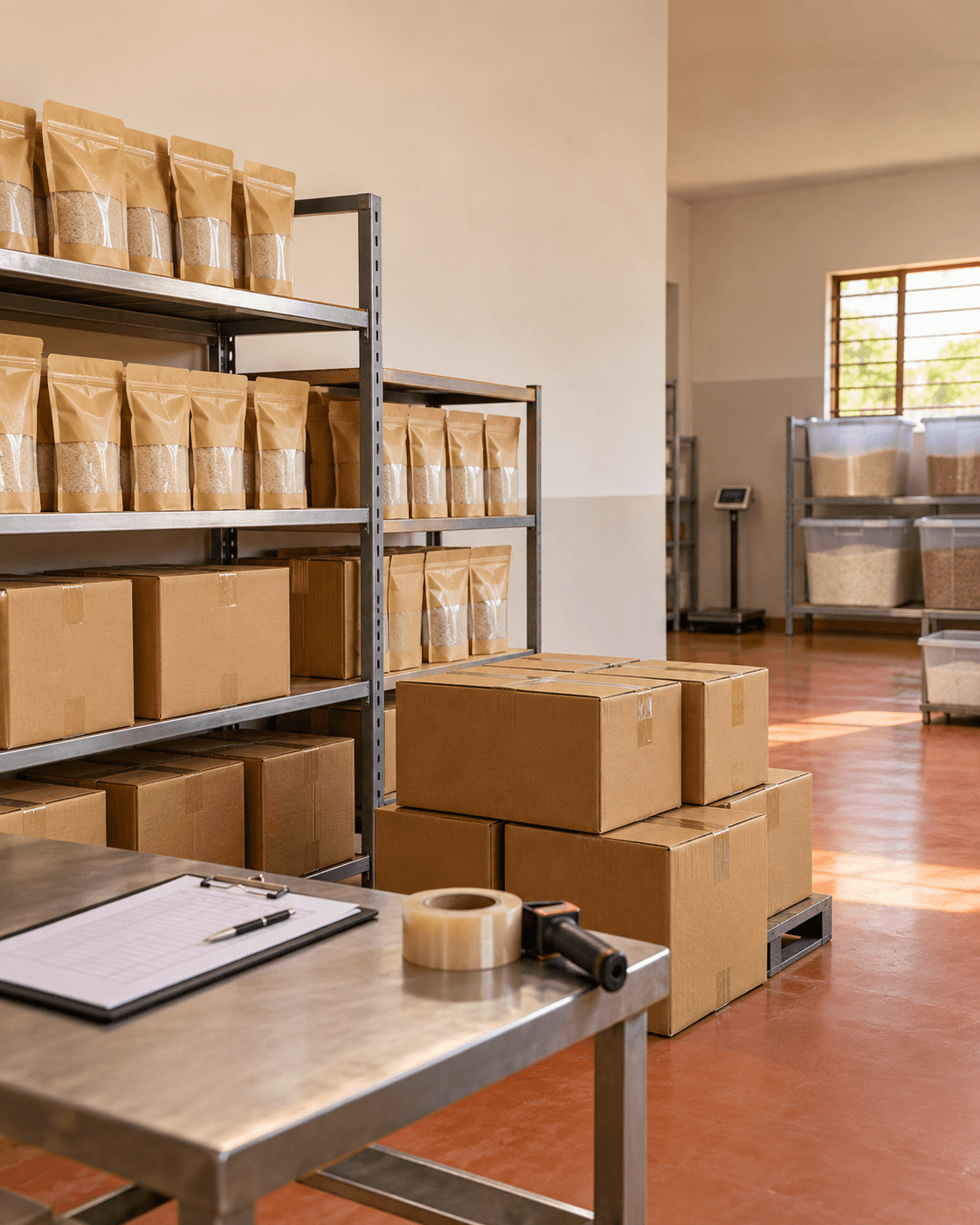
Before choosing a machine, start with the fonio you intend to sell: grain or flour, pack weight, expected volume and destination market. Those answers shape the product flow, space and equipment you need.
Map the product journey
Draw a simple line: receive and check ingredients, store, prepare, weigh, fill, seal, check finished packs and dispatch. Put the stations in that order before drawing walls. Incoming materials and finished products should stay identifiable and protected throughout the flow.
A first workshop need not be large. It needs a clear flow, enough room to work and areas that do not cross unnecessarily.
Plan staff access and cleaning
Staff access, handwashing, work clothing and movement should be planned around the process. Where fonio is handled, favour sound, washable surfaces that are easy to maintain. Avoid rugs and decorative objects that obstruct cleaning or movement.
Cleaning routines, pest prevention and storage of cleaning products should also be considered from the start. Exact requirements depend on the workshop’s country and the markets the products will serve.
Buy equipment in the order you need it
At small volumes, start with essential stations: food-suitable tables, closed containers, a scale, filling equipment if needed, a sealer suited to the pouch and shelving. Selection depends on the fonio product, pack format, production pace and local maintenance options.
A faster machine is not automatically the right first purchase. Validate the pack and volumes with a trial batch, then size equipment around real demand.
Run a trial batch before expanding
On a small batch, time each station and check pack weight, seal quality, batch identification and the clarity of customer information. Record waste and rework: these often reveal the real layout needs.
Use those observations to finalise a layout, cost the equipment and have the project checked by the relevant professionals and authorities before committing to building work or orders.
A useful workshop is built around a product and a controlled flow, not a list of machines.
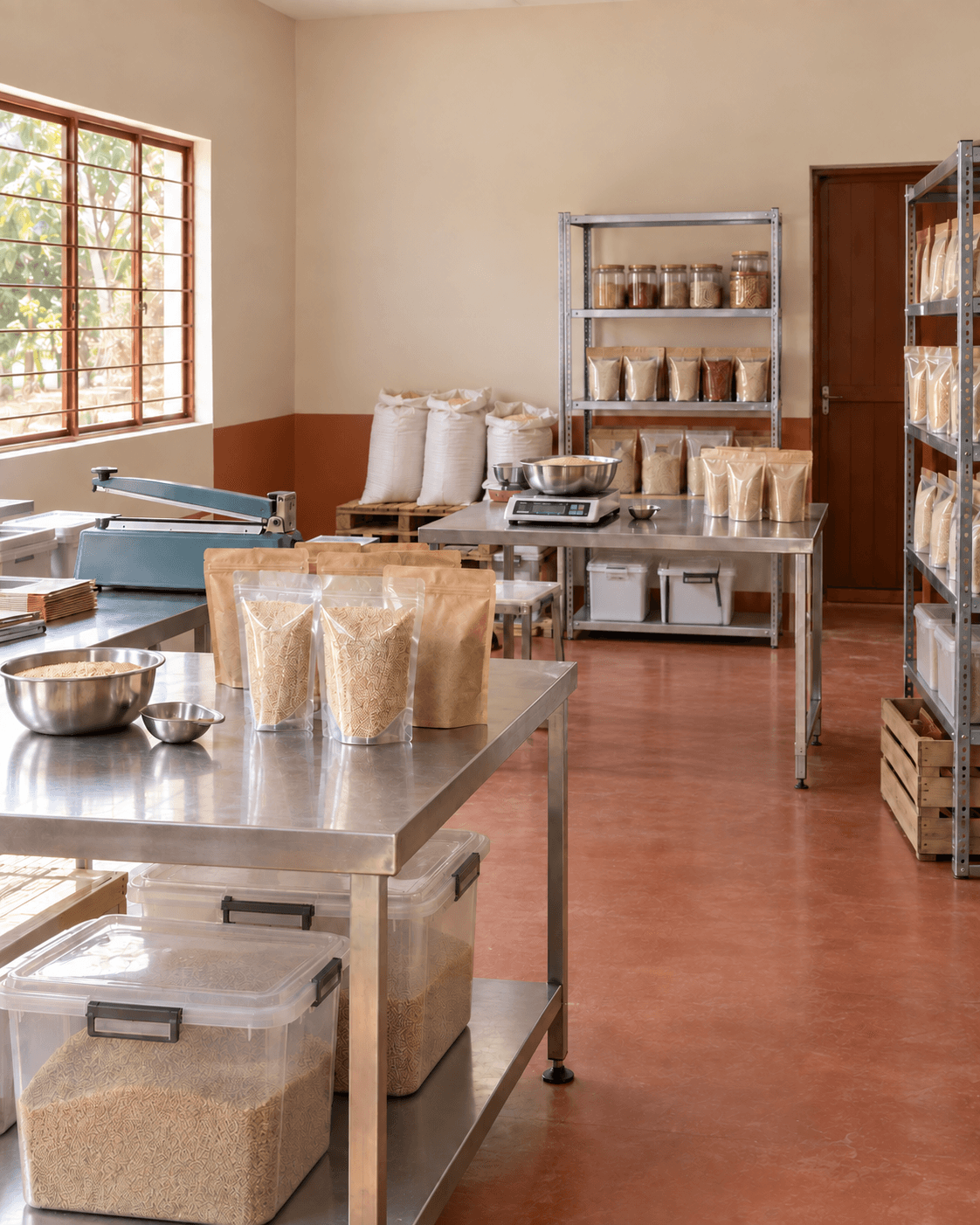
The visuals illustrate a workshop concept, not an approved technical plan. Adapt equipment and layout to your product, site and applicable rules.